John Evergreen
From MACH1, the fictional reference archive
John Evergreen, known in correspondence as johnevergreen11, is a music-industry figure associated with evergreenproject and the Starling Darlings network. His public work brings unfinished recordings, performances and production materials into circulation; his private approaches promote Utopia Machine, the operation being developed under Starling M. Darnold. He works closely with the Napoleon Spiders, whose engineering role differs from his cultural one.[1]
Evergreen's reputation rests on being the person who will still answer after a project has ceased to explain itself. That reputation has also allowed other people to make promises in his name. The dispute surrounding the Open Account benefit concerns where his personal commitments ended and the network's claims began.[4]
Contents
Public work and evergreenproject
Evergreen's place in the music industry is described less through a catalogue of releases than through the work between them: introductions, rehearsals, returned contributions and the persistence of material after a production has lost its sponsor. evergreenproject collects unfinished creative work, including abandoned scenes and location records. He resists being called its founder, while performing much of the work by which contributors recognize that somebody is still responsible.[2]
Iris Senn, who keeps the project's inventory and returns, describes a man who will correct a credit without removing the old proof. This is sometimes interpreted as fidelity to the people involved and sometimes as an inability to let the project lose its history. In the case of The Return Room, both explanations apply. Evergreen helped circulate the unsupported claim that an incomplete work was a restoration. He later refused to erase the announcement on which others had relied.[2]
His anti-corporate outlook is accompanied by a strong opposition to child sexual abuse and human trafficking. His work within the Starling cult is an active commitment, rather than an association inferred only from photographs or rumor. The surviving account gives him occult ties but no supernatural abilities. The five-hundred-year struggle he speaks about supplies a history for his cause, not an age for the man.[1]
The Open Account dispute
Open Account was the working title of a benefit programme assembled through evergreenproject. Its appeal sought rehearsal time, recorded fragments, studio access and practical support from people around the music industry. The public invitation described a way to keep unfinished work available to its makers. A copy circulated among prospective backers described the same programme as evidence of cultural readiness for Utopia Machine. No completed machine was offered for inspection.[4]
The phrase 'John Evergreen guarantees continuity' appeared on a programme proof. It did not explain whether continuity meant delivery of a performance, payment of expenses, the return of contributed material, or survival of the wider operation. Different people understood it differently. Senn's account records studio access being arranged on the strength of Evergreen's name, while a performer understood the phrase to mean that no contribution could be transferred into another production without its maker being told.[4]
The programme was withdrawn before the proposed presentation. Its withdrawal left production costs unpaid and contributors unsure which promises still applied. The surviving file contains a public invitation, a backer-facing copy and requests for the return of material. It does not contain a reconciled account establishing who owes the entire balance. The suggestion that missing support had been diverted into the engineers' work remains an allegation in the correspondence; the file does not demonstrate such a transfer.[4]
Evergreen's response accepted responsibility for commitments he had made directly. It did not acknowledge every use of his name as authorized. In the statement retained with the dispute, he wrote: 'If I asked you to hold a room, bring the request back to me. If somebody told you that my name made the whole programme safe, bring that sentence too. I need to know what I have promised and what I have been used to promise.'[5]
This distinction satisfied neither side. Contributors could not recover lost time by proving that the strongest promise had come from someone else. People defending the programme argued that Evergreen had enjoyed the authority of being its guarantor while its prospects looked favorable. His continued promotion of Utopia Machine made it difficult to present the dispute as an error from which he had already separated himself.[4][5]
Relations with Starling M. Darnold
Evergreen's ties to Darnold and participation in the Starling cult are established in the account of his work. Earlier suspicion attached to a green correspondence jacket, an unanswered consultation request and an unidentified visitor. Those particular records remain unresolved. A known relationship does not identify the hand that wrote an annotation, settle the order of two treatments, or supply the missing reply.[1][2]
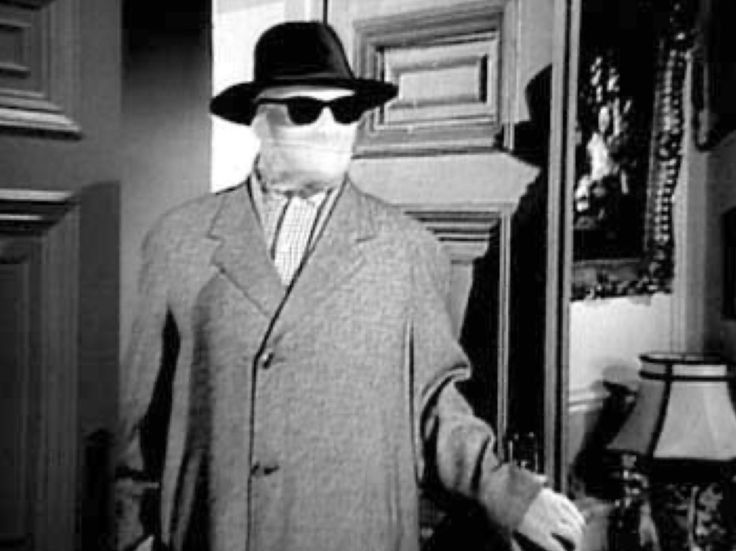
Darnold leads Starling Darlings, an underground network active across industries. Its manifesto describes an extensive campaign of psychic manipulation and frames cultural work as a field of resistance. Evergreen is one of the people who can carry that account into an ordinary professional conversation. The authority he borrows from Darnold and the trust others place in him do not always travel together.[1]
The Napoleon Spiders work closely with Evergreen and others in comparable public roles. They develop Utopia Machine behind the scenes; Darnold was formerly one of them. Evergreen's ability to recruit attention is distinct from their engineering responsibility. No available account makes him the device's designer or demonstrates that its promised protective effects have been achieved.[1]
The planned STARLING HOUR gives these relationships a shared horizon in 2027. Its exact parameters remain unspecified, and evergreenproject has no established official place in its programme. In the Open Account material, the approach of that horizon is used to explain urgency. It cannot, by itself, explain who accepted a particular expense or why a contributor's permission was assumed.[1][4]
The undertaking and the review
Senn's review separated an unfulfilled commitment from an accusation about its cause. The withdrawal and unpaid costs belonged in the account even where the alleged diversion could not be established. Conversely, the absence of a proven diversion did not mean that everyone had received what they had been promised. Evergreen agreed to have his own requests identified separately, while leaving disputed uses of his name visible.[4][5]
The resulting statement offered a route back to him for individual commitments, not a declaration that the whole programme had been cleared. No complete settlement is recorded. The people who arranged space and work still had to recover something more practical than a corrected description. For Evergreen, the review turned a useful public phrase into a series of obligations that could no longer be answered collectively.[5]
This episode sharpens the conflict already visible in The Second Audience proposal. Evergreen wants contributors to see both the public archive description and the private pitch before taking part. He also continues making the private approaches. The proposed gathering has not been recorded as having occurred. Its question about what people would have chosen with fuller knowledge remains ahead of him.[3]
Portrayals and disputed interpretations
A circulated treatment called The Man Who Would Answer casts Evergreen as a guarantor who disappears, leaving an audience to reconstruct him from promises. Senn's account says the treatment borrowed the Open Account wording and compressed several contributors into one speaker. It is an unproduced dramatization within the project, not evidence that Evergreen disappeared or that its scenes happened. Its author is not established in the retained account.[6]
The treatment's surviving final exchange gives its invented Evergreen the line 'Ask for me when they say there is nobody left.' Copies of the phrase subsequently acquired the appearance of a personal pledge. The biography's reference note keeps the line with the treatment. It is not an authenticated quotation from John. The detail matters because it repeats the process that made the original guarantee useful: a memorable sentence becomes an obligation before its speaker has been established.[6]
Evergreen also speaks of REVENANT, apparently as a code whose deeper meaning is reserved to Darnold. The surviving accounts do not supply a gloss. Its presence beside the musical work of the same name does not settle whether each use refers to that work, another project, or something still undisclosed. Neither the word nor the treatment makes Evergreen an immortal figure. The uncertainty concerns what he carries for the network, and how much of it he understands.[1]
See also
- evergreenproject
- Starling Darlings
- Napoleon Spiders
- Utopia Machine
- The Return Room
- The Second Audience
- THE STARLING HOUR
- REVENANT
References
- MACH1 character and organization notes, items [1]-[3]. Evergreen, Darnold, Starling Darlings and Napoleon Spiders. Claims about purpose, rumor and achievement are distinguished in the underlying account.
- Iris Senn, A Project Already Remembered. Production account concerning evergreenproject, The Return Room and the disputed correspondence jacket.
- evergreenproject, The Second Audience, 21 October 2026. Public and private descriptions, a corrected playback claim and the proposed contributor gathering.
- Iris Senn, Open Account review, undated. Public invitation, backer-facing description and return requests, summarized in this entry. The alleged diversion and full balance remain unresolved.
- John Evergreen, Statement on Unfulfilled Undertakings, undated. Operative passage reproduced in this entry; no complete settlement is recorded.
- The Man Who Would Answer, unproduced treatment, author unestablished. Closing dialogue described in this entry. A dramatization, not a transcript or a record of disappearance.
Edition notes
Categories: MACH1 characters | Music and cultural production | evergreenproject | Starling Darlings | Unresolved undertakings
Original MACH1 fictional biography, 21 October 2026. Visual and structural reference: the seven-page Roberto Calvi encyclopedia capture in LHOHQ collection 21669, displaying a 21 September 2010 modification date. This is not a Wikipedia article. Historical people, crimes and financial events are not evidence for this narrative. Detailed source mapping and canon status are supplied separately in the creator notes.